

When stone crafts enter the era of public space art, society and the public have set higher standards for the cultural nature of stone sculpture. It no longer has a decorative function in the environment, and is no longer limited to its core position. It is to move to a broader area and create an artistic atmosphere for the entire area.
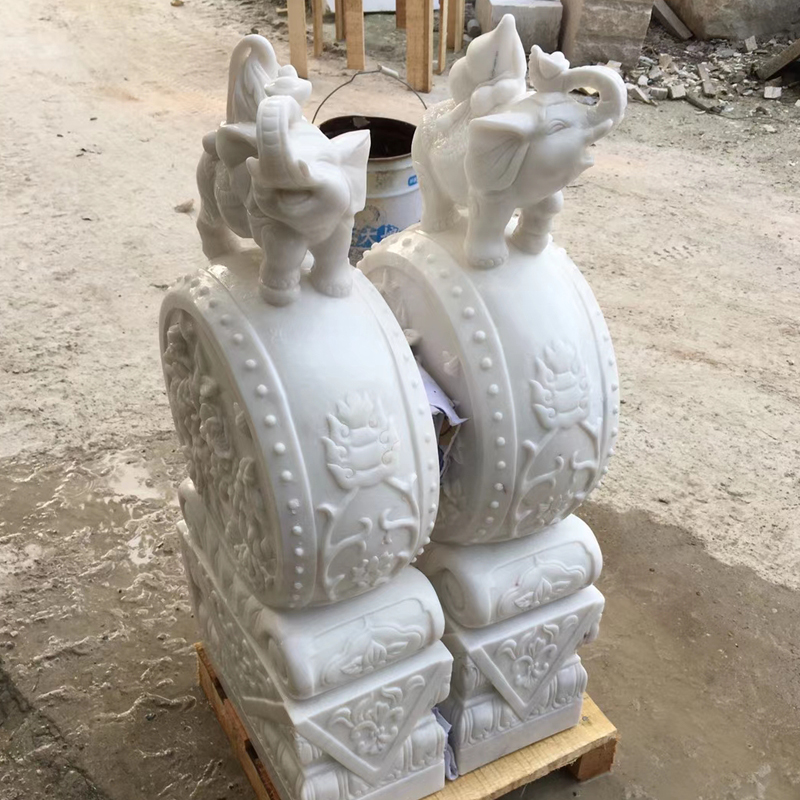
We need to use simple, primitive tools, through constant manual tapping, and use the plasticity of metal to form a three-dimensional surface that is consistent with the surface of the stone sculpture. This process consumes a lot of physical energy and also creates high-intensity noise. This repeated tapping requires plenty of time and patience.
This process is only complete when each piece can be well consistent with certain areas of the stone carving. After all the small pieces of the surface are determined, each small piece is welded and connected to form the subsequent stone carving. The surface is basically the same as the original work. The method based on cold work creates the outer surface of stone sculpture by tapping, so it is more suitable for stone sculpture with less complex surface layers.
The surface of the stone sculpture after welding is relatively rough, which is far from the surface effect that people usually think is enough to be used as a mirror. After the electric welding is completed, the stone sculpture need to be polished before the actual effect can be displayed in front of people's eyes. Although some power tools are currently available for the grinding and polishing process, it still requires a lot of time and manpower to complete.