

In the stone carving industry and most spatial three-dimensional art processing industries, stone carving profiles are used in large quantities as molds and finished products due to their advantages of light weight and high strength. In the general process of stone carving craftsmanship, stone carving molds are always used as a transitional stage between clay sculptures and materials. Its price and craftsmanship advantages are also the reasons why it is so popular.
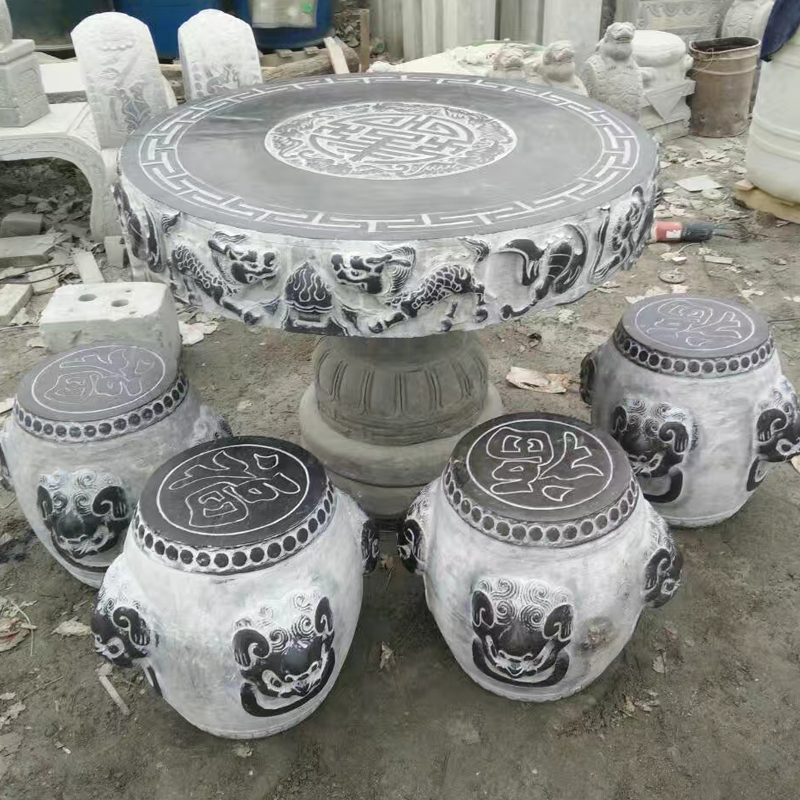
Take the bronze color processing process of stone mountain sculptures as an example: an alloy with a copper content of 64% is bronze, and acrylic paint coloring can achieve this effect. First, a dark pigment is used as a base color, and the pigment is mixed with water to completely cover the surface of the stone sculpture. The key point is to apply it evenly without accumulation or through the background color. Wait for it to dry before applying it a second time. In order to highlight the visual effect of patina, you can mix white and green paint into light-colored paint and apply it to the convex and concave areas on the surface of the stone sculpture. After all the paint is completely dry, apply it with white and colorless shoe polish, and the bronze matte effect will appear.
In addition to the craftsmanship, the tonal solution in the middle and later stages also needs to be changed by the needs and content of the stone mountain carving. Different types of brightness and darkness occur due to lighting effects or factors affecting lighting. It is necessary to make various colors and materials better. Integration also requires practitioners of stone mountain carving craftsmanship to continuously explore during the actual shaping process.